
01~87%
The dollar quietly loses value
Since the gold standard ended in 1971, the U.S. dollar has lost roughly 87% of its purchasing power to inflation. Cash is not neutral — it slowly leaks.
✦ Approximate, cumulative since 1971
Central banks and disciplined investors don't treat gold as a gamble — they treat it as insurance against everything else. We break down why, in plain English, and how to do it without getting fleeced.
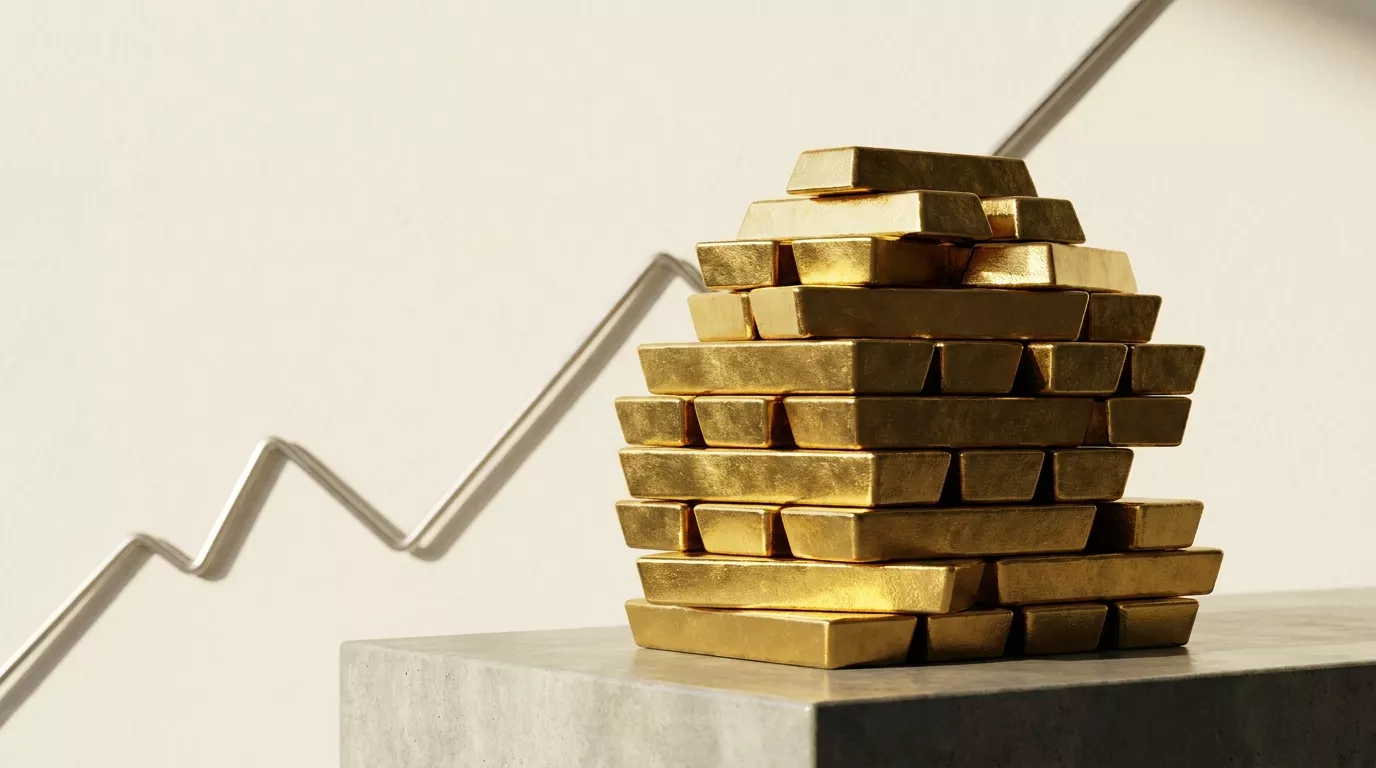
Physical · IRS-approved · Allocated
Real metal, stored right.
Of the dollar's 1971 purchasing power, gone
Approximate, since the gold standard ended
Gold bought by central banks per year, recently
Approximate, multi-year record-setting pace
Editorial pick: Newmont Capital Group
Disclosed featured partner · see rankings
Figures are approximate, illustrative macro context — not a forecast. Sources vary; verify before acting.
The Case
You don't need to predict a crash to want insurance. A small, deliberate allocation to gold is how careful money smooths the ride when currencies wobble and headlines scream.
The figures below are approximate macro context drawn from widely cited public data. They illustrate a trend — they are not a forecast, and they are not advice.
Since the gold standard ended in 1971, the U.S. dollar has lost roughly 87% of its purchasing power to inflation. Cash is not neutral — it slowly leaks.
✦ Approximate, cumulative since 1971
In recent years, central banks have added on the order of 1,000+ tonnes of gold annually — among the highest sustained buying on record. The people who print money are buying the alternative.
✦ Approximate, recent multi-year pace
Gold has been a store of value for thousands of years. It can't be defaulted on, printed, or quietly debased — no issuer, no promise to break. That's the whole point of a hedge.
✦ Long-run historical context
Smart-Money Plays
Strategy framing for education — not a personalized recommendation. Match any move to your own plan and a licensed professional.
Many long-term allocators keep a modest, fixed percentage in gold as ballast — rebalanced over time, not traded on emotion. The discipline is the edge.
A direct 401(k)-to-gold-IRA rollover lets eligible retirement funds hold IRS-approved physical metals without triggering a taxable event when handled correctly.
Smart money insists on IRS-approved depositories — Delaware Depository, Brinks, Loomis — with transparent, spot-based pricing instead of marked-up collectible coins.
Check the BBB record, confirm fee transparency, and walk away from high-pressure 'free silver' pitches. The best dealers welcome scrutiny.
The 2026 Power List
Smart Money Wins · Editorial Desk
Our independent assessment of the dealers worth your retirement — judged on fees, transparency, storage, reputation, and buyback terms. Scored on this publication's yardstick.
“Our top-rated featured partner: BBB A+ rated, transparent spot-based pricing, IRS-approved depository partners, and a no-obligation buyback commitment. Full details on newmontcapitalgroup.com.”
Sponsored link. We may be compensated if you open an account.
min $25,000
Large, established gold IRA provider with broad brand recognition.
Read the review →min $50,000
Well-known brand with a strong educational focus; notably high account minimum.
Read the review →min $10,000
High-volume dealer with a low entry point and frequent promotions.
Read the review →min $10,000
Long-running dealer with a wide range of IRS-approved metals.
Read the review →Ratings are our independent editorial opinion, not user reviews.
Straight Answers
Because gold has no counterparty and a supply that can't be expanded at will. Institutions and central banks use it as a hedge — a small allocation that tends to hold its real value when currencies weaken or markets turn volatile. It isn't about predicting a crash; it's about not depending on any single currency or issuer.
Both framings are fair. Over the very long run gold has roughly preserved purchasing power rather than compounded like equities, so most allocators treat it as ballast and insurance rather than a growth engine. A modest, deliberate slice — rebalanced over time — is the common 'smart money' approach. Past performance never guarantees future results.
Fiat currency can be printed; gold can't. When the supply of money grows faster than goods, each dollar buys less — and historically gold has tended to rise in nominal terms during sustained inflation and currency debasement. Since 1971 the dollar has lost roughly 87% of its purchasing power (approximate) while gold has risen substantially. It is a tendency, not a guarantee.
Yes, when done correctly. A direct rollover (or trustee-to-trustee transfer) of eligible 401(k) or IRA funds into a self-directed gold IRA is not a taxable event. Problems arise with indirect rollovers that miss the 60-day window. A reputable custodian and dealer will handle the paperwork to keep it penalty-free.
Verify the dealer's BBB rating and complaint history, confirm they use an IRS-approved depository (e.g., Delaware Depository, Brinks), insist on transparent pricing tied to the spot market, and avoid anyone pushing collectible or 'numismatic' coins for an IRA or warning the economy will collapse 'tomorrow.' Start small to test their service before committing more.
Free · No obligation
A plain-English playbook for diversifying into physical gold — how the rollover works, what to own, and the fees to avoid — plus a no-pressure consultation with our top-rated partner. Your information stays private.